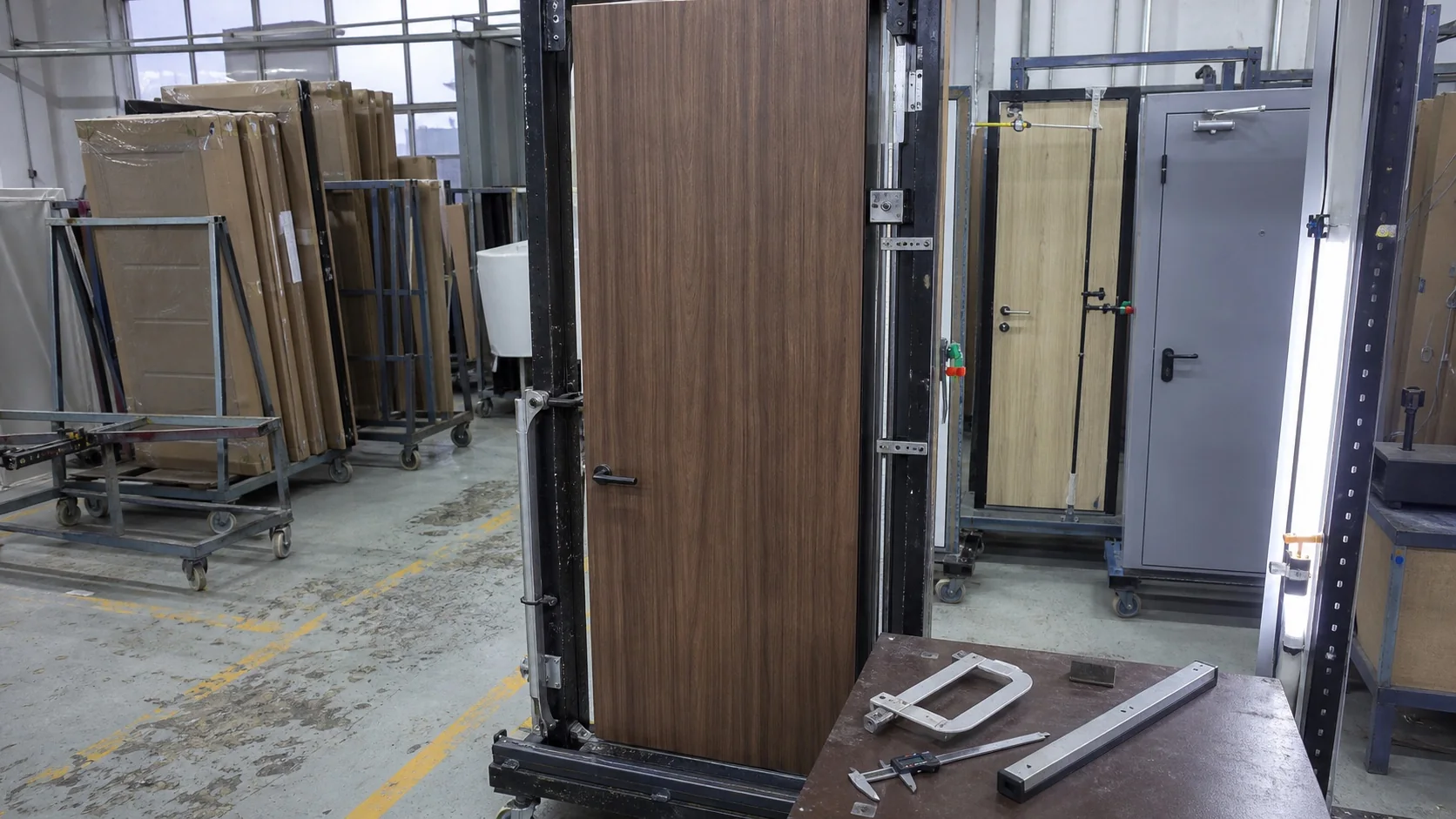
1. Build the inspection baseline before production
Inspection cannot succeed when the order is described only by a catalog image. Release a controlled file containing the quotation, purchase order, approved sample, drawings, finish reference, bill of materials, tolerances, hardware list, packing method and any applicable evidence.
Rule: every quality checkpoint must answer “compared with what?” If the reference is not controlled, an inspector can record differences but cannot decide conformity.
2. Check incoming and hidden materials
Door defects often begin before assembly. Depending on the product route, checkpoints may include facing or substrate identity, core material, timber or composite sections, steel sheet and frame parts, foil or decorative paper, adhesive, seals and hardware.
Record supplier labels, dimensions, appearance and the approved material route. Hidden components such as lock blocks, hinge reinforcement and internal cores should be verified before they are closed inside the leaf.
3. Use in-process gates for irreversible steps
Prioritize stages that cannot be economically corrected later: core lay-up, frame assembly, lamination, foil application, edge finishing, machining and hardware reinforcement. The exact gates vary by door family.
- Confirm model and dimensions at first-piece stage.
- Check surface adhesion, edge continuity and visible defects.
- Verify hinge and lock preparation against the approved drawing.
- Record process or batch references needed for traceability.
4. Inspect the finished leaf and complete set
Final inspection normally covers quantity, model mix, dimensions, squareness, surface appearance, edge condition, frame and casing compatibility, hardware preparation, markings and accessories. Assemble representative sets where practical to check fit rather than inspecting components in isolation.
Sampling level, acceptance criteria and critical defects should be agreed before inspection. Aesthetic language such as “good quality” is not measurable; use the approved sample and written tolerances.
5. Keep conformity inspection separate from performance evidence
A factory inspection cannot create a fire, acoustic, security or other regulated rating. Such claims depend on the exact assembly, test or certification route and destination acceptance. Inspection can check whether delivered components match that approved assembly, but it does not replace valid evidence.
For rated work, use the fire-door procurement guide before supplier nomination.
6. Release packing and loading as a quality gate
Check cartons or crates, corner and face protection, labels, set grouping, spare parts, moisture precautions and container condition. Photograph the container before loading, loading stages and final seal. The packing list must reconcile with marked packages and released quantities.
LANDO uses order-specific checkpoints rather than promising one generic inspection plan for every door system. Review the manufacturing and QC workflow for the commercial sequence.
Need a comparable door quotation?
Send the destination, buyer type, dimensions, quantity, construction, finish, frame, hardware scope and named port.