Extruded section
Leaf thickness, chamber geometry, skin thickness direction, weight or density basis and tolerances.
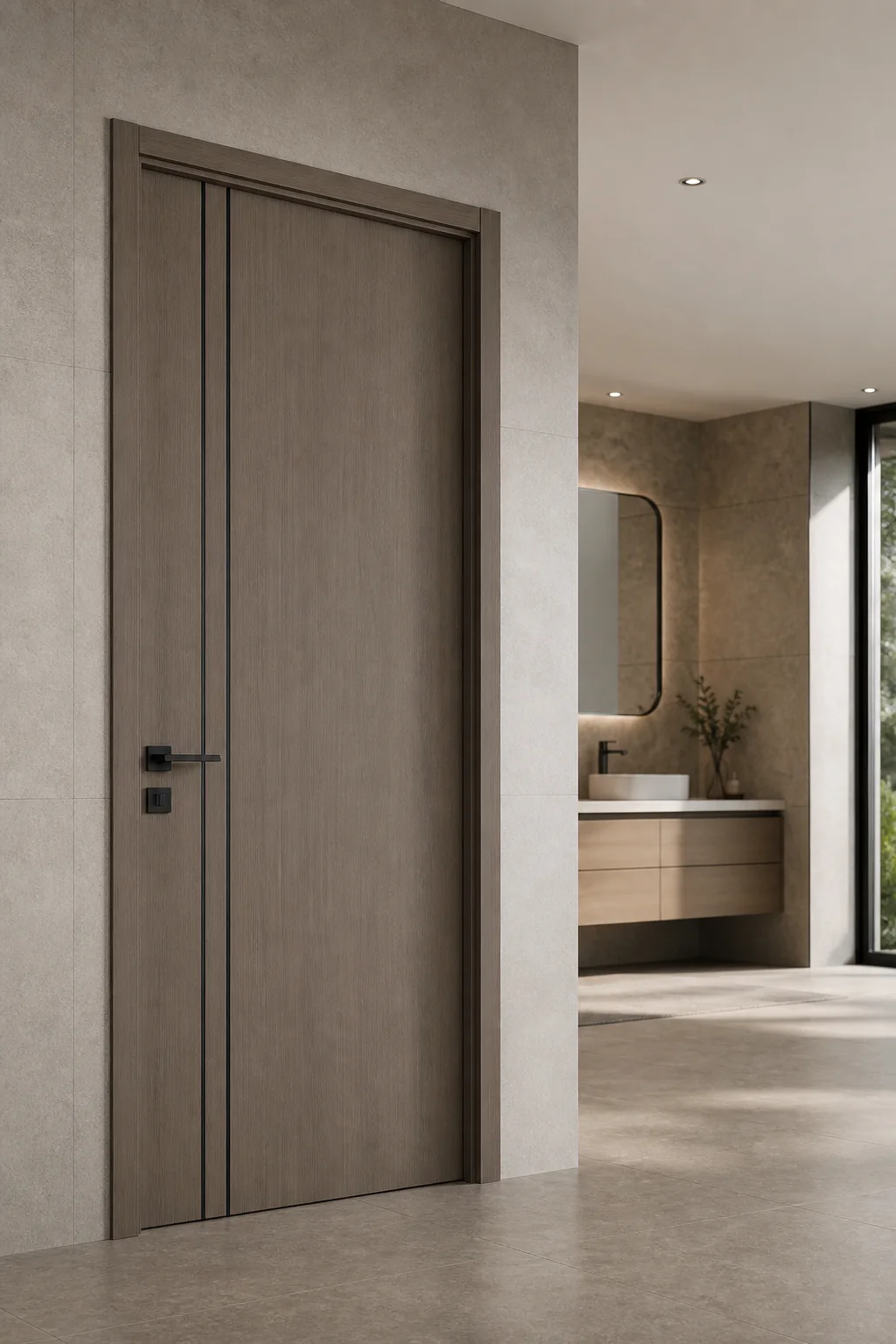
Composite interior door program
Hollow-extruded WPC door leaves coordinated with approved WPC frame and casing profiles for moisture-conscious interior applications and warm-climate distribution.
System starting point
Our standard sourcing direction is a hollow-extruded WPC interior door leaf with matching WPC frame and casing selected from an approved profile section. Reinforcement, hardware holding points and surface process are confirmed by model and order.
Available finish routes may include PVC foil wrapping, heat-transfer decoration or coating, subject to the selected factory process and approved sample.
Read the WPC buying guide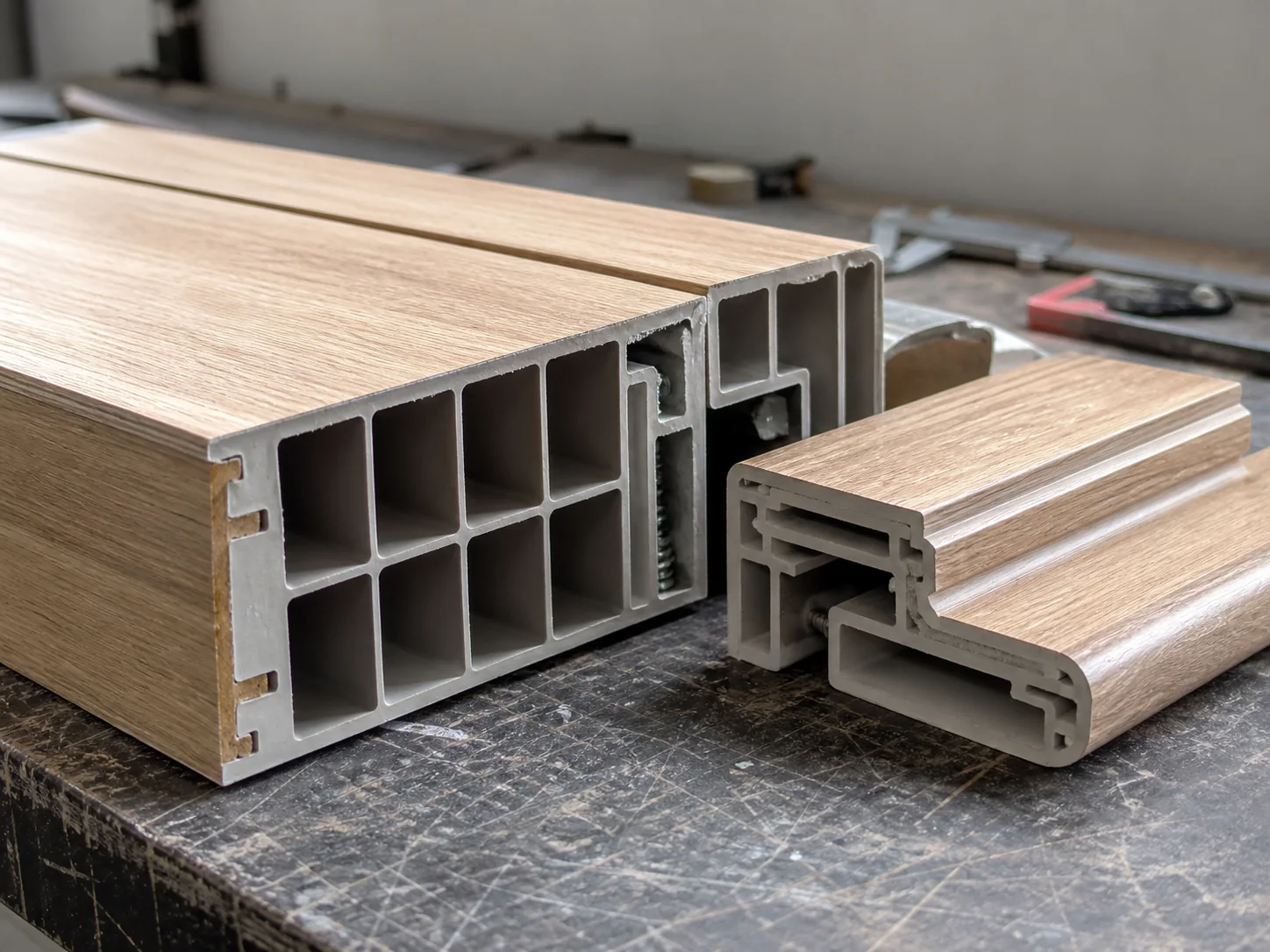
Starter edit
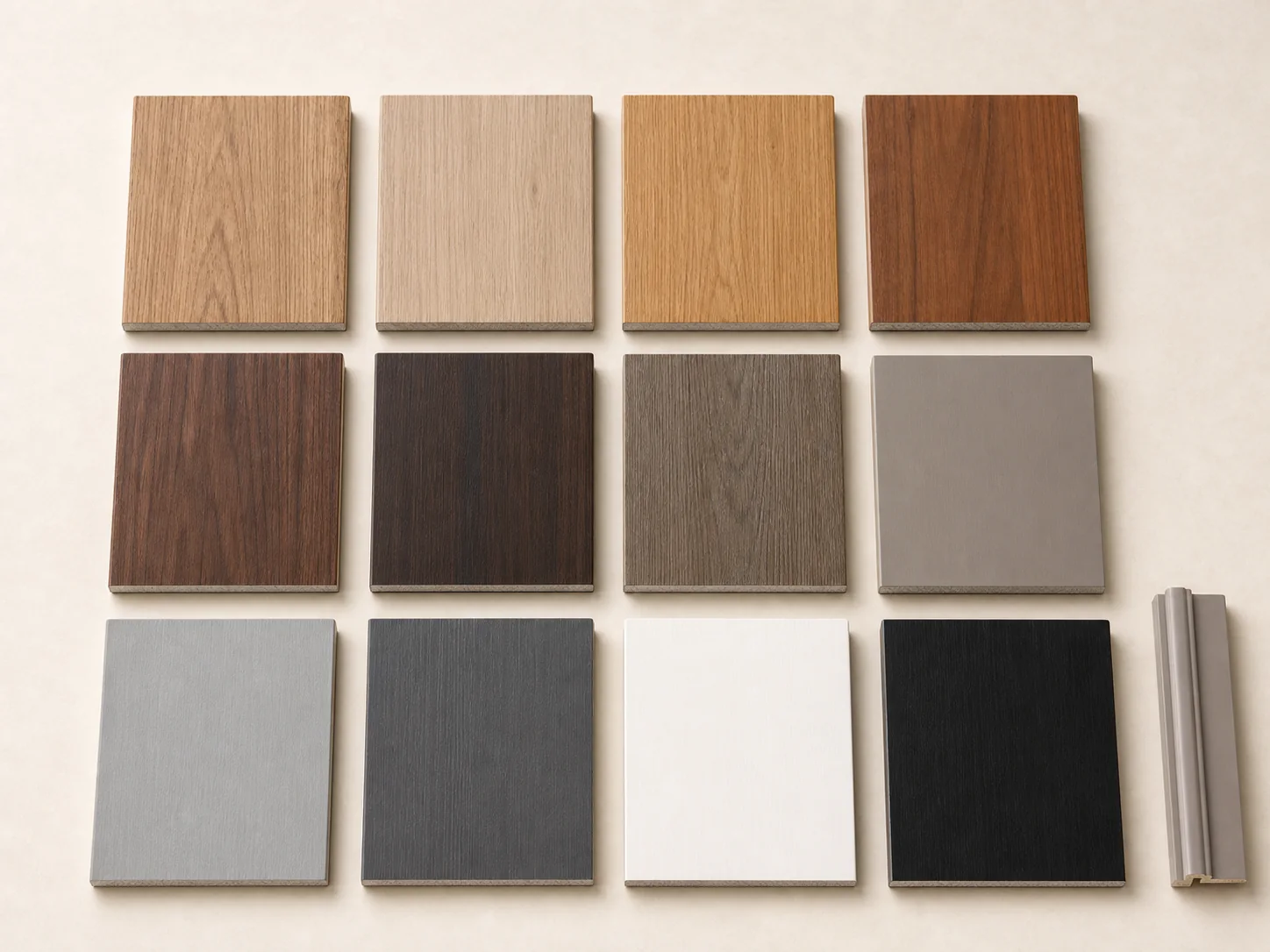
Natural woods, warm neutrals and architectural darks are selected as useful market starting points. Final color follows a physical finish sample.
What buyers should compare
Material composition alone does not prove complete-door performance. Compare the exact profile, reinforcement, hardware preparation, frame and production consistency.
Leaf thickness, chamber geometry, skin thickness direction, weight or density basis and tolerances.
Lock and hinge reinforcement, screw-holding method and approved hardware locations.
WPC jamb, casing, wall-thickness range, joint detail, seals and installation assumptions.
PVC foil, heat transfer or coating route; edge protection, carton strength and loading plan.
Market range logic
A distributor launch usually benefits from fewer finishes, repeatable sizes and a clear good/better/best structure. Samples should test appearance, assembly quality and hardware preparation, not only color.
Building a WPC range?
We will map the next questions for section, frame, hardware and packaging.